

How to Choose an Egg Donor: a Fertility Doctor's View
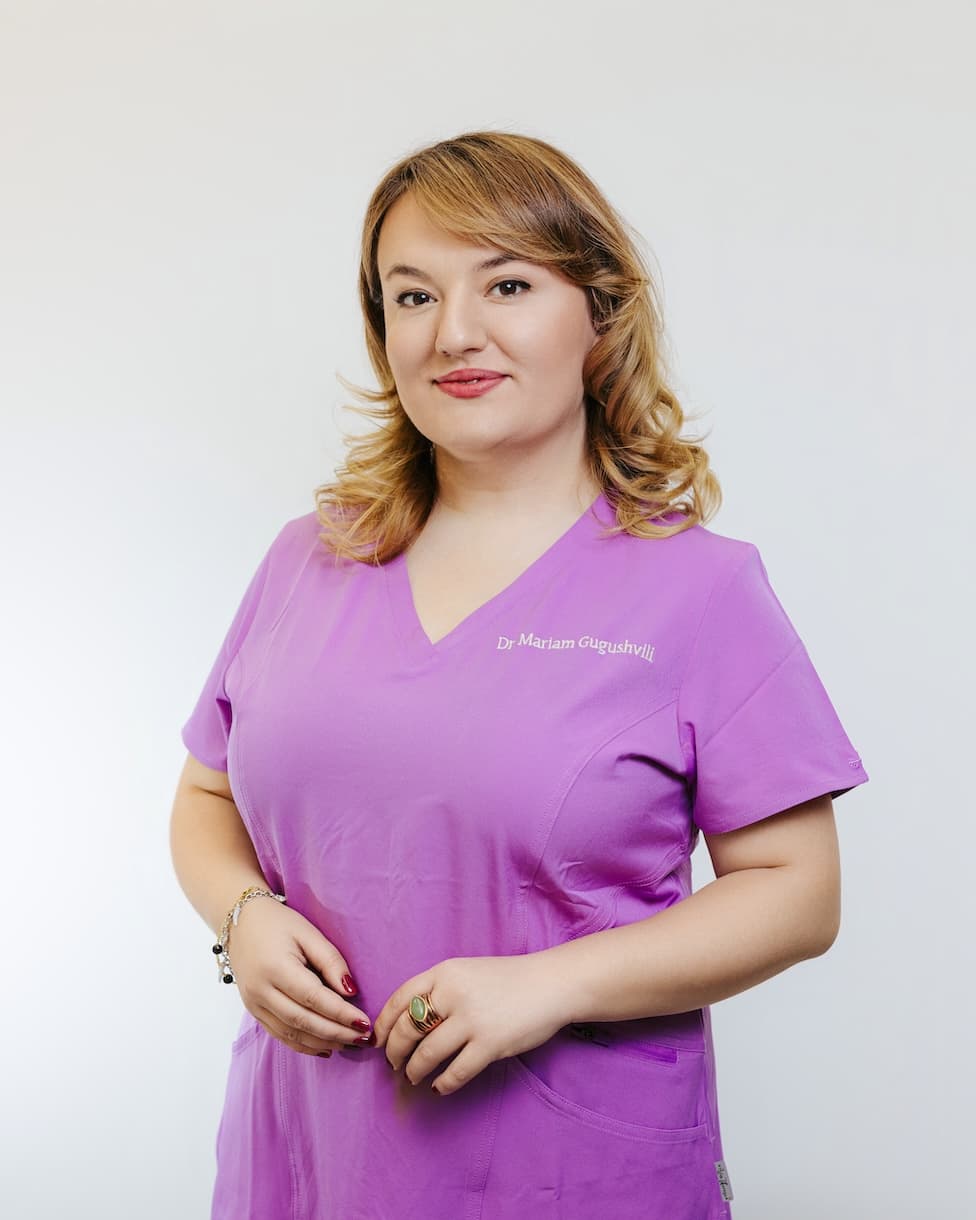
Dr. Mariam Gugushvili
Reproductive medicine physician, ESHRE member · 7 years of clinical practice
Couples often choose a donor the way they would browse a catalogue: by photo and eye colour. Emotionally that is understandable, but as a physician I see that the parameters that actually determine the outcome of a program are quite different. Here is what truly matters in a donor profile – and which questions to ask the agency before you decide.
Age: the main predictor of oocyte quality
The optimal donor age is 20 to 29. With age, the share of chromosomally abnormal eggs grows: in women under 30 roughly a quarter of oocytes are aneuploid, after 35 – more than half. This is why serious programs usually cap donor age at 30–32, and an "experienced 36-year-old donor with a great profile" should prompt questions, not enthusiasm.
Ovarian reserve: AMH and what it means
AMH (anti-Müllerian hormone) reflects the follicle reserve. For a donor, a good reference point is 2.0 ng/ml and above: it predicts an adequate response to stimulation and a sufficient number of mature oocytes. Important: AMH speaks about the quantity of eggs, not their quality – so it is always assessed together with age, never instead of it. It also helps to look at the donor's previous cycle, if there was one: how many mature oocytes were retrieved is more informative than any single lab value.
Medical screening: the mandatory minimum
Before entering a program, a donor must have: an examination by a fertility specialist with ultrasound and antral follicle count, a hormonal panel, infection screening (HIV, hepatitis B and C, syphilis, PCR for sexually transmitted infections), general labs, a physician's clearance and a psychological evaluation. Ask the agency exactly which tests were done and how recent the results are: a screening from a year ago is not a screening.
Genetics: what neither the profile nor the photo shows
Each of us is an asymptomatic carrier of several recessive mutations. A problem arises when the donor and the intended father happen to carry a mutation in the same gene – then the child's risk of disease is 25%. The gold standard is the donor's karyotype plus screening for common recessive conditions (spinal muscular atrophy and cystic fibrosis at a minimum), ideally an expanded carrier panel matched against the father's results. If the donor's genetic tests are "in progress" or "available for an extra fee" – that is normal, but make the decision after the results, not before.
The profile and family history
Read the profile beyond the phenotype: hereditary diseases in the family up to grandparents, the donor's own births (a healthy child of her own is a good sign both for fertility and genetics), education and motivation. Contradictions in the profile, or a story that is too "perfect" without a single specific detail, should raise questions – real profiles are always concrete.
Phenotype and appearance: important, but last
Blood group compatibility (if it matters to the family), eye and hair colour, height, ethnicity – all legitimate criteria, and we always take them into account in matching. But I advise couples to first filter donors by medical criteria and only then choose by appearance among those who passed. The reverse order is the most common mistake: a couple falls in love with a photo and no longer wants to hear about an AMH of 1.1.
The video introduction: why it matters
A written profile does not convey speech, manner or liveliness – the things parents later look for in their child. A short video or a video call (in an anonymous format, without exchanging contacts) removes most doubts and makes the choice a conscious one. At Bloom we record video introductions of our donors and arrange anonymous video meetings at the couple's request.
Questions to ask the agency
How many mature oocytes were retrieved in the donor's previous cycles? How recent are the screenings, and can you see the actual reports? Have a karyotype and carrier screening been done? How many families have already used this donor, and is there a limit on the number of cycles? An agency with nothing to hide will answer all four questions in writing, with documents. An evasive answer to even one of them is a reason to choose another agency – not another donor.
If you are choosing a donor now and want to review specific profiles with a physician – book a free consultation and we will go through them together.
Would you like to discuss your situation with the Bloom team?
Free consultation